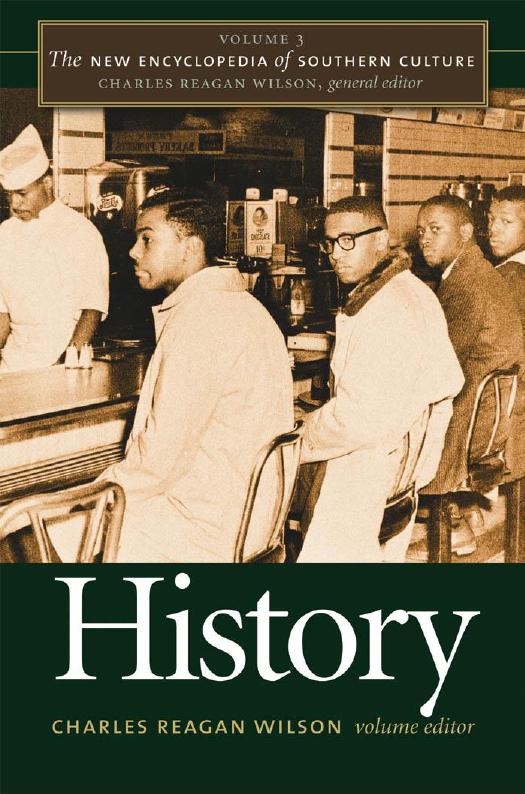
The New Encyclopedia of Southern Culture by Wilson Charles Reagan
Author:Wilson, Charles Reagan
Language: eng
Format: epub, pdf
Publisher: The University of North Carolina Press
Published: 2006-04-08T04:00:00+00:00
Racial Attitudes
Although it is impossible to measure racial attitudes directly, they may be gauged from written and oral expressions, gestures, and institutional arrangements. Attitudes may be analyzed as discrete entities. As one authority has suggested, the term attitude “suggests thoughts and feelings (as opposed to actions) directed toward some specific object (as opposed to generalized faiths and beliefs).” The term also “suggests a wide range in consciousness, intensity, and saliency in the response to the object.”
Racial attitudes in the South have primarily involved whites and blacks. Attitudes toward American Indians and toward Asians have been less consistent and less pervasive. In general, both whites and blacks have held less pejorative attitudes toward these groups than toward each other. Nonetheless, both large groups have tended to see Indians and Asians as separate groups with distinguishing characteristics of their own. Blacks have had to deal with the fact that whites usually have less pejorative attitudes toward other nonwhite groups. Members of these smaller groups, of course, have their own attitudes toward other people whom they perceive as being racially different.
Among both blacks and whites, racial attitudes have hinged on a bipolar system of racial classification. Whites especially have defined all persons with perceptibly African ancestry as “colored,” “Negro,” or “black.” Gradations of intermixed African and European ancestry, based largely on complexion, have carried some meaning. Both groups, while accepting the bipolar system, have accorded some measure of preference to lighter-skinned members of the “Negro” category. The phenomenon of “passing” testifies to the strength rather than the weakness of the bipolar system.
White attitudes toward blacks in America have never been peculiar to the South. Their expression and institutional implementation have indeed been more salient in areas where slavery persisted after the Revolutionary era, but the underlying attitudes have always been remarkably similar throughout the country. Pejorative attitudes toward blacks were evident from the period of early settlement in all the English colonies. Regional distinctions within the southern colonies were fully as important as differences between the nascent North and South.
The origins of white racial attitudes may be found in the interaction of two powerful forces: certain important attributes of English culture and the need for bound labor in land-rich colonies, which needed to export in order to survive. More generally, these origins lay in powerful urges for domination. The content of the attitudes was powerfully molded by the social and psychological insecurities engendered by the Anglo-European migration across the Atlantic into a land that worked to undermine traditional social controls.
Some scholars have held that these attitudes emerged inevitably as the ideology of an oppressive master class. Others have maintained that they were built into English cultural traditions that themselves formed a part of an ancient Western European heritage. A third group has viewed these two possibilities as simultaneous forces that interacted with each other to produce racial attitudes that have been remarkable in the history of world cultural contacts for their virulence, consistency, pervasiveness, and persistence through time.
Download
The New Encyclopedia of Southern Culture by Wilson Charles Reagan.pdf
This site does not store any files on its server. We only index and link to content provided by other sites. Please contact the content providers to delete copyright contents if any and email us, we'll remove relevant links or contents immediately.
| Africa | Americas |
| Arctic & Antarctica | Asia |
| Australia & Oceania | Europe |
| Middle East | Russia |
| United States | World |
| Ancient Civilizations | Military |
| Historical Study & Educational Resources |
Cat's cradle by Kurt Vonnegut(15362)
Pimp by Iceberg Slim(14520)
4 3 2 1: A Novel by Paul Auster(12399)
Underground: A Human History of the Worlds Beneath Our Feet by Will Hunt(12100)
The Radium Girls by Kate Moore(12033)
Wiseguy by Nicholas Pileggi(5791)
The Fire Next Time by James Baldwin(5452)
Perfect Rhythm by Jae(5409)
American History Stories, Volume III (Yesterday's Classics) by Pratt Mara L(5310)
Paper Towns by Green John(5194)
Pale Blue Dot by Carl Sagan(5012)
A Higher Loyalty: Truth, Lies, and Leadership by James Comey(4965)
The Mayflower and the Pilgrims' New World by Nathaniel Philbrick(4507)
The Doomsday Machine by Daniel Ellsberg(4492)
Killers of the Flower Moon: The Osage Murders and the Birth of the FBI by David Grann(4449)
The Sympathizer by Viet Thanh Nguyen(4396)
Too Much and Not the Mood by Durga Chew-Bose(4350)
The Borden Murders by Sarah Miller(4329)
Sticky Fingers by Joe Hagan(4204)
